Your Demo Ended. The Buying Decision Didn't.
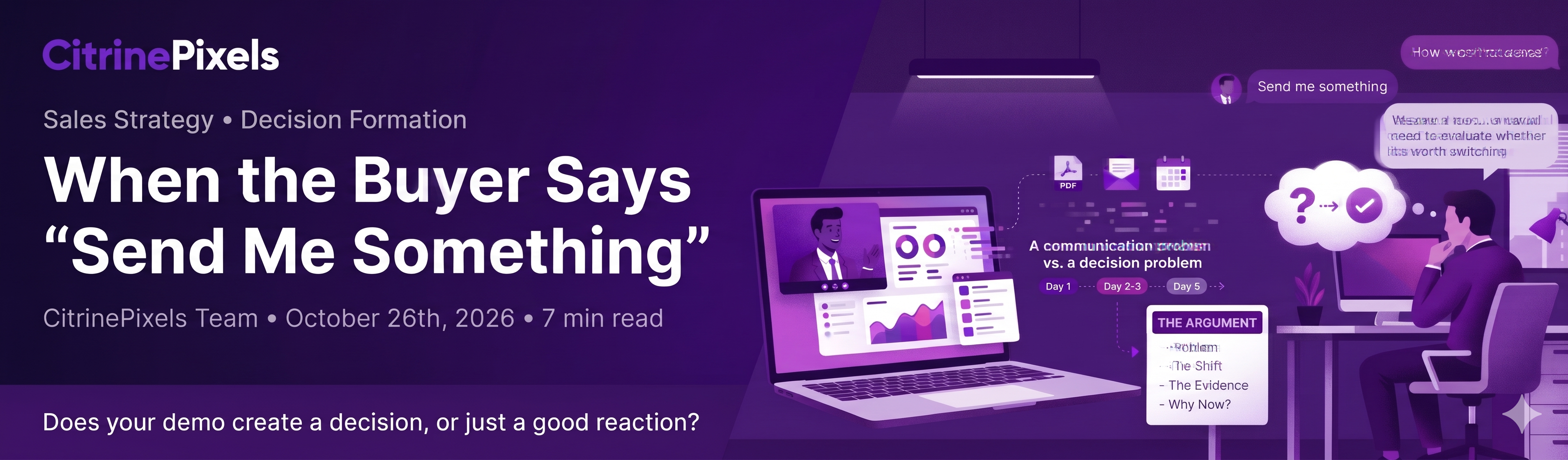
Why it matters: A demo can end well and still leave the buying decision unfinished. What happens next depends less on how well you follow up than on what the buyer concluded during the demo.
When a deal stalls after a good demo, it looks like silence. Underneath, it's either a communication problem or a decision problem. Follow-up can preserve a decision; it can't create one the demo never built.
• The difference between communication and decision problems, what the anchor really is, and how to execute the 72-hour handoff.
When the Buyer Says “Send Me Something,” Your Demo Has a Problem
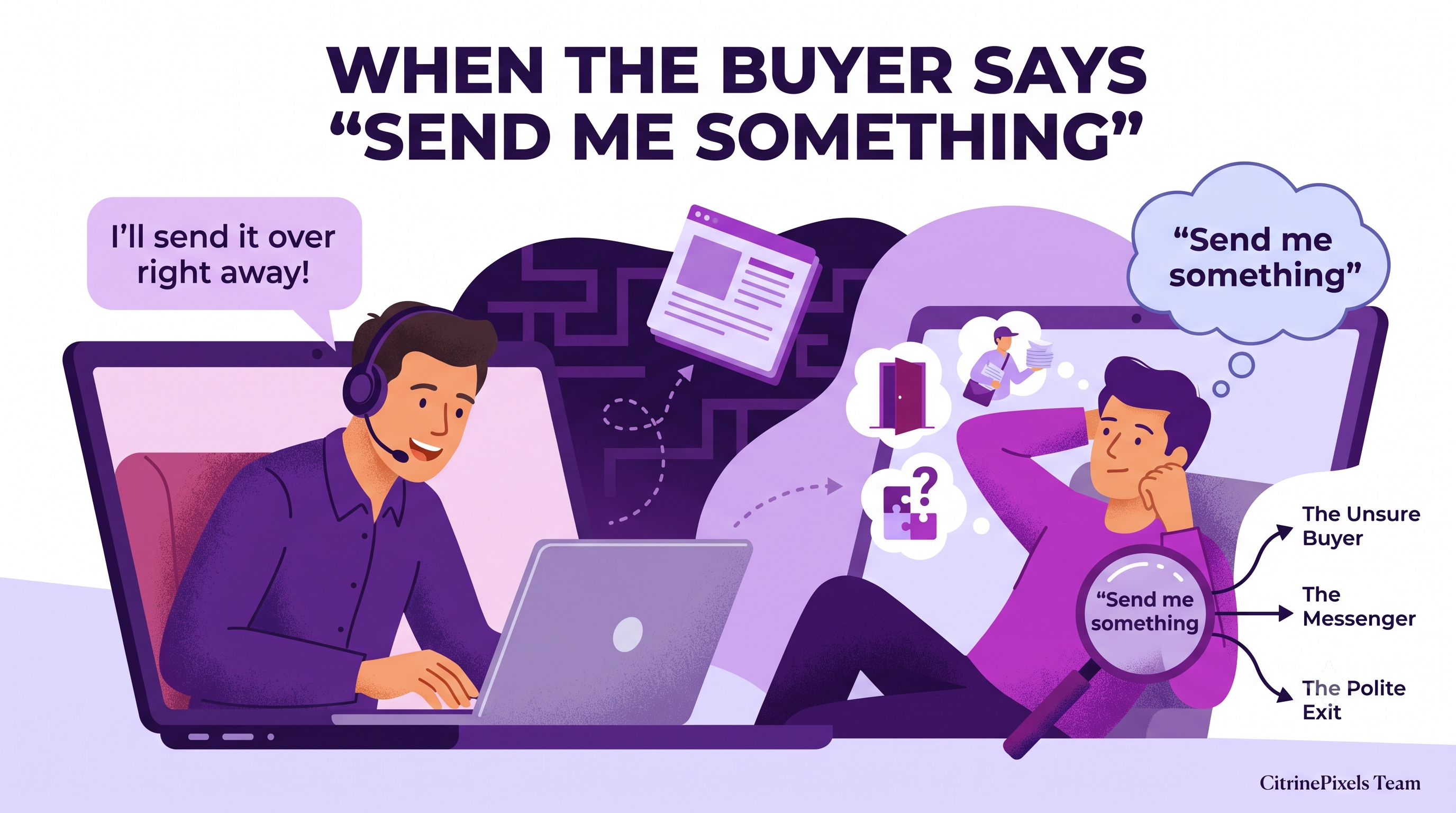
Why it matters: “Send me something” sounds like interest. More often it's a polite exit, and what you say in the next ten seconds decides whether the deal moves or quietly fades.
The buyer wasn't lying. It's that “send me something” was never the step forward you took it for. It was a way to end the call without saying what they were actually thinking. Learn the 10-second decoder and what to send instead.
• What “send me something” really means, the 10-second buyer decoder, and what to send instead of a 30-slide deck.
Your Demo Is Answering Questions the Buyer Never Asked
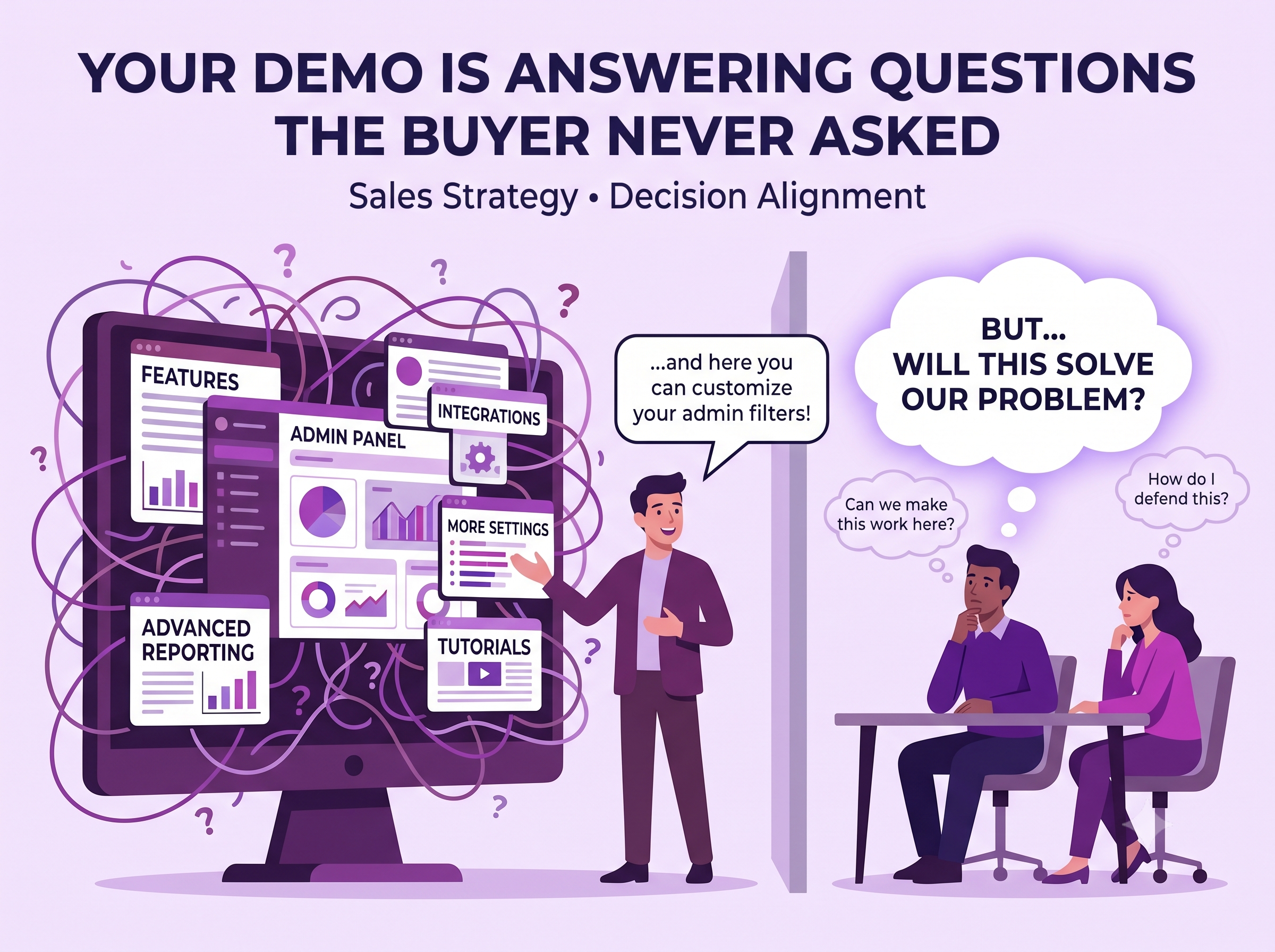
Why it matters: Every screen you show answers a question. If it isn't the buyer's question, it isn't neutral. It's noise they have to sort through while their real question stays open.
The demo was accurate. It just wasn't relevant. You spent forty minutes answering questions the buyer never asked, while the one they came with went unanswered. Build a question map before you build a demo.
• Why feature tours answer seller questions, the 3 silent buyer questions, and the 10-minute diagnostic.
When Your Demo Ignores What Discovery Already Told You
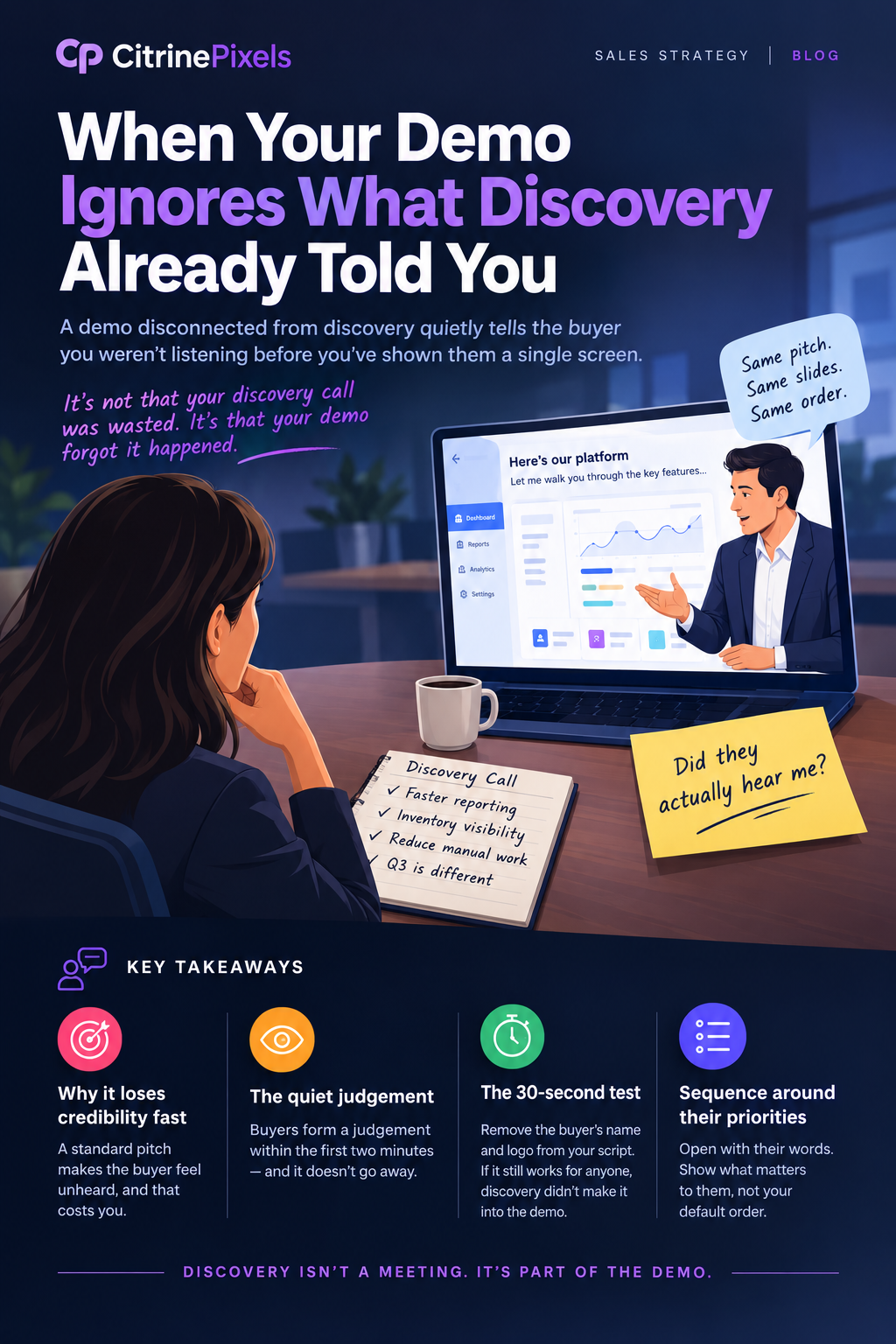
Why it matters: A demo disconnected from discovery quietly tells the buyer you weren't listening before you've shown them a single screen.
It's not that your discovery call was wasted. It's that your demo forgot it happened. Teams default to a generic pitch, quietly incurring a credibility tax before product evaluation even begins.
• Why standard openings erode credibility, the 30-second script diagnostic, and how to sequence around buyer priorities.
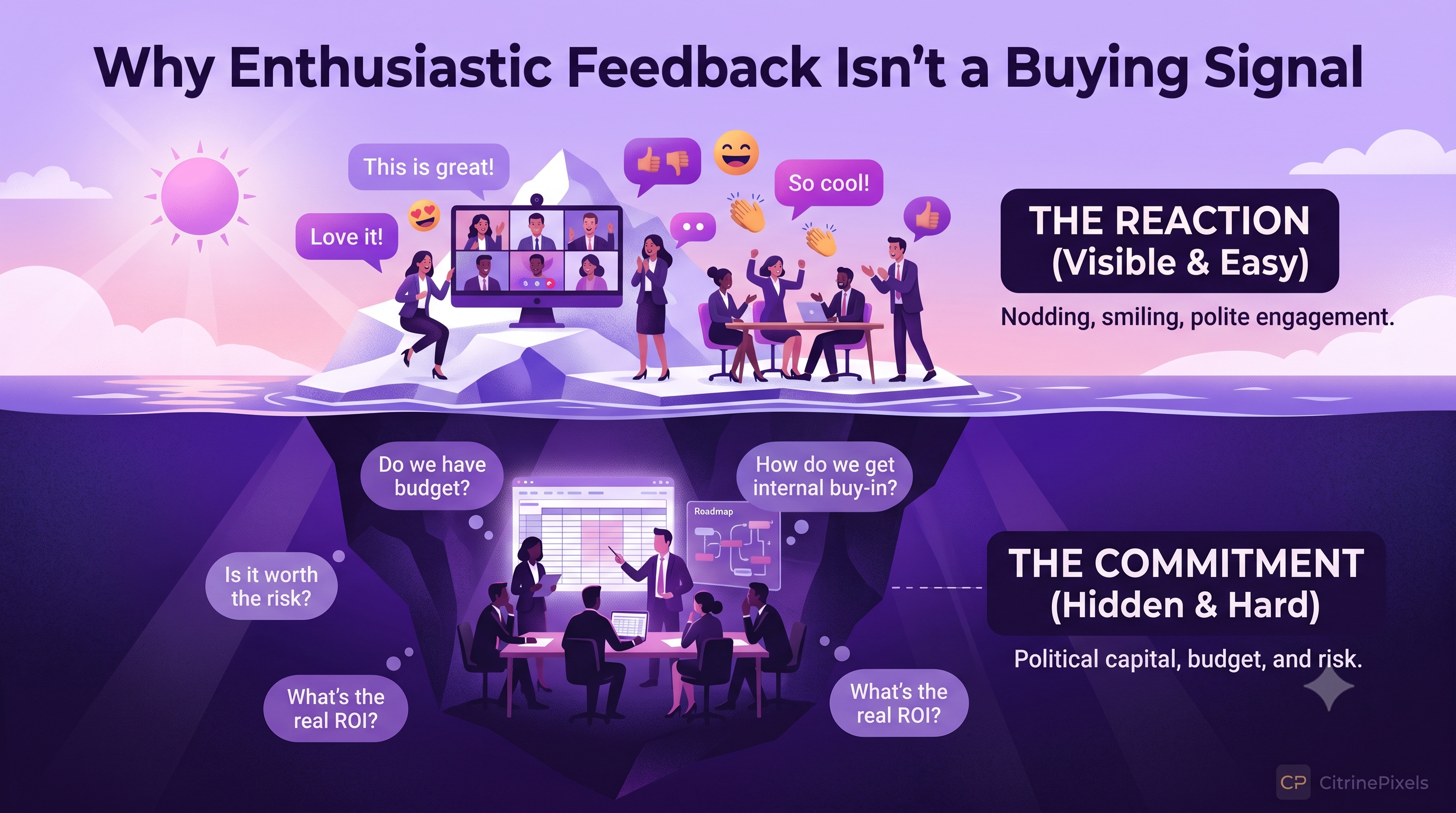
Why Enthusiastic Feedback Isn't a Buying Signal
Why it matters: Reactions and commitments come from two different places in a buyer's decision, and most teams only listen to one of them.
It's not that buyers were lying when they said, “This is great.” It's that “great” was never a commitment. Teams grade the demo by the reaction because it's visible, while commitment happens in silence.
• Why glowing demo reactions predict nothing and how to test for real commitment before ending the call.

Your Champion Can't Sell What They Can't Retell
Why it matters: The demo that wins the room you're in can still die in the room you're not.
Nine times out of ten, that's not a stalled deal. It's a lost translation. The champion didn't cool off; they just couldn't reproduce in twelve minutes with no notes what took you forty minutes with a live product.
• Why demos fall apart when repeated internally and what actually survives the handoff.
The Hidden Cost of Demo Fatigue
Why it matters: Why buyers lose momentum long before they lose attention.
It's not your product. It's the way buyers experience your demo.
• Why standard linear presentation structures fatigue buyer decision capacity.


Your Buyers Aren't Confused. They're Still Waiting for the Anchor.
The questions buyers ask after your demo reveal where they really are in their decision. Here's how to tell the difference.
• Why buyers ask questions that show they are waiting for an anchor.
What "We'll Think About It" Usually Means
It's not hesitation. It's a signal your demo didn't finish its job.
• Why "We'll think about it" usually isn't an objection.
.png)


